Crafting a Bold Brand with Gorilla Mandala Line Art
First Impressions: A Design of Strength and Spirit
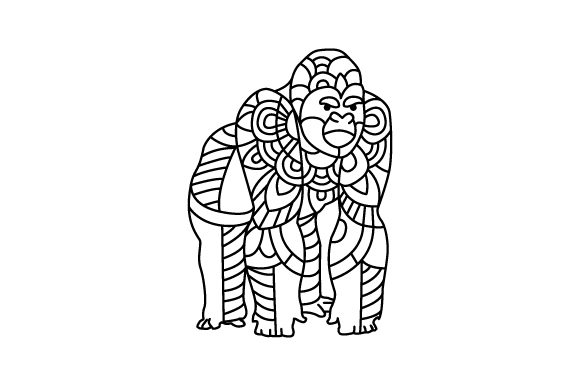
When a design asset like the Gorilla. Mandala Line Art Style for Coloring Book lands on a brand designer’s desk, the first evaluation is always about mood. This particular graphic brings a unique blend of power and intricate beauty. The mandala structure suggests a sense of focus, spirituality, and organic patterning, while the gorilla subject injects raw strength and earthy presence. It feels bold, artisanal, and deeply connected to nature. For a local business, this suggests a brand personality that is confident, authentic, and perhaps a touch mystical—ideal for a brand that wants to stand out as grounded yet aspirational.
The Local Business Fit: From Boutique Shops to Artisan Brands
Imagine applying this to a real project. A client runs a small, handmade candle business specializing in earthy, masculine scents like cedar and oakmoss. Or perhaps an independent coffee roaster focusing on single-origin, robust blends. Even a boutique selling organic skincare for men could find a powerful ally in this design. The gorilla mandala line art doesn’t whisper; it announces a product with substance. It leans towards a premium, handmade feel, avoiding playful or overly feminine notes. It’s decorative yet strong, making it perfect for crafts and businesses rooted in the raw beauty of the natural world, a standout category within Animals-inspired design assets.
From Digital File to Physical Brand: Practical Applications
As a brand designer, my next step is visualizing the asset across the client’s entire ecosystem. The provided formats—SVG, PNG, EPS, DXF—are crucial. The vector files (SVG, EPS) mean this gorilla mandala can be scaled infinitely for a large poster or shrunk perfectly for a tiny product label without quality loss. The transparent PNG is ready for digital overlays. Here’s how it translates to real-world small business branding:
- Product Labels & Packaging: This design can become the hero graphic on a candle jar, a coffee bag, or a soap box. Its circular mandala form naturally fits as a central emblem.
- Brand Identity Accents: It could serve as a secondary logo element, featured on business cards, hang tags, and thank-you cards to reinforce brand spirit.
- Promotional & Social Media Graphics: Use it in Canva templates to create cohesive Instagram posts, website banners, or flyers for a new product launch.
- Printable Inserts & In-store Materials: Imagine it on a price list for a boutique, or as a decorative element on a minimalist menu for a rustic café.
Building Customer Trust Through Professional Presentation
Using a well-executed graphic design asset like this directly impacts customer perception. For a local business, polished packaging and consistent visuals build trust. A gorilla mandala line art used prominently on a product creates a stronger first impression and better shelf appeal in a crowded market. It establishes a clear visual hierarchy—the eye goes to the striking art first, then to the supporting text. This consistency across labels, social media graphics, and even stickers on shipment boxes makes the brand feel more professional and intentional. The emotional connection is key: a customer picking up a product adorned with this design feels they’re buying something with character and story, not just a generic item.
Strategic Placement: Where This Asset Works Wonders
For maximum impact in a local business project, I’d focus this asset on specific high-visibility applications:
- As a dominant, standalone graphic on product packaging and labels.
- As a decorative brand element on larger surfaces like posters or boutique wall displays.
- Within promotional campaign graphics for seasonal launches (e.g., a “Wild & Robust” winter coffee blend).
- On thank-you cards and branded stationery to enhance the unboxing experience.
- In product mockups and website hero images to tell a visual brand story instantly.
Designer Notes: Where to Exercise Caution
Even a versatile asset requires thoughtful application. For the Gorilla. Mandala Line Art Style, I’d advise careful use in certain contexts:
- On very small labels where the intricate line details might become muddy or illegible.
- On packaging already crowded with essential text, like ingredient lists or legal information, where the decoration could compete for attention.
- For brands aiming for a ultra-minimalist, luxury aesthetic where such a bold illustrative element might feel out of place.
- On low-contrast backgrounds where the lines might not stand out clearly.
Always preview the PNG on actual mockup backgrounds and test the SVG at various scales.
A Brand Designer’s Practical Checklist Before Use
Before integrating this design asset into a client’s commercial design project, a thorough review is non-negotiable. Here is my real-world checklist:
- Test the graphic on actual packaging mockups to assess scale and impact.
- Check how it renders in black and white for any potential single-color print scenarios.
- Preview it at the smallest intended label size to ensure line clarity.
- Test it overlaid with the brand’s primary color palette.
- Compare it against competitor packaging to gauge its uniqueness and market fit.
- Review the print quality by outputting a test proof.
- Inspect the SVG file’s editability in vector software—can lines be adjusted or colors isolated if needed?
- Test pairing the design with different font styles (a sturdy sans-serif, a delicate script, a classic serif) to find the perfect typographic companion.
- Most critically: Confirm the commercial license allows use for the client’s physical product sales, branding, and marketing visuals. Never assume.
The Final Takeaway for Creative Entrepreneurs
The Gorilla. Mandala Line Art Style for Coloring Book is more than a digital product or clipart. For a local business owner—a candle maker, a roaster, a skincare artisan—it’s a potent tool for building a memorable brand identity. It offers a path to more professional packaging, stronger emotional resonance with customers, and more polished marketing visuals across the board. When applied strategically, with an eye for scale, contrast, and brand cohesion, this illustration can become the cornerstone of a visual identity that feels both authentically handmade and confidently market-ready. It’s an invitation to tell a deeper story about your product’s strength and spirit.